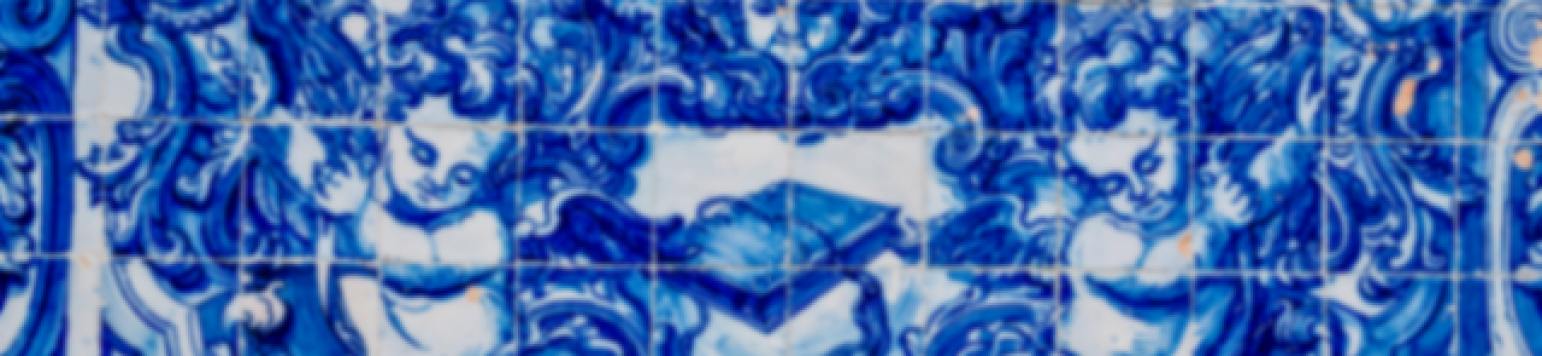
Portugal’s Blue Art ‘Azulejo’
One of the favorite routes for architecture and art enthusiasts: Portugal… With its Mediterranean climate, historical heritage, natural treasures, and unique culture, it is an ideal destination for those who want to add an artistic touch to their travel plans. Alongside its cultural richness, Portugal’s vibrant, deep-blue tiles also captivate travelers, serving as a motivating reason to visit.

Portugal’s Blue Art ‘Azulejo’
One of the favorite destinations for architecture and art enthusiasts: Portugal… With its Mediterranean climate, historical heritage, natural treasures, and unique culture, it is an ideal destination for those who want to add an artistic touch to their travel plans. Alongside its cultural richness, Portugal’s vibrant, deep-blue tiles captivate travelers, serving as a motivating reason to visit.
This dazzling traditional ceramic art, known as ‘Azulejo,’ is unique to Portugal and decorates walls, floors, and ceilings as a source of inspiration. However, Azulejo is not only a decorative element but also recognized as a cultural heritage reflecting Portugal’s collective memory. In this article, we take a closer look at this impressive Portuguese art form…
The Origin and Etymology of ‘Azulejo’
For centuries, Azulejo served as a bridge between Eastern and Western cultures; its name derives from the traditional ceramic art ‘Zellij,’ frequently used in the architecture of historical buildings in Morocco, Algeria, Tunisia, and Andalusia, which in Arabic means ‘polished stone.’ In Islamic architecture, it was common to cover surfaces with ceramic-mosaic panels made by assembling geometrically cut, single-colored glazed tiles. Early tile examples in 13th-century Europe, where Azulejo was newly introduced, were also mainly composed of geometric patterns. Over time, as Azulejo became more widely used, compositions became unique with the addition of local and cultural elements; scenes were enriched with depictions of humans and animals, floral decorations, historical events, and biblical representations, leading Azulejo to reach the uniquely Portuguese form seen today. Azulejo panels with compositions on various subjects from past to present can now be found in Portugal—from train stations to the interior and exterior surfaces of historical buildings. Although the most commonly used colors were blue, yellow, green, and white, by the 18th century, influenced by porcelain from China, Azulejo began to be produced only in blue and white. The intensive use of blue led to the misconception that the word originated from the Spanish word ‘azul,’ meaning blue. After losing popularity at the beginning of the 20th century, Azulejo has, since the 2000s, regained its status as a key element of cultural tourism, contributing to Portugal’s global recognition.
Azulejo as a Cultural Element
Azulejo has often been used to depict important events in Portuguese history. For example, scenes of the Battle of Bussaco are skillfully illustrated on panels in the Bussaco Palace, built between 1888 and 1907. These works, displayed on the palace’s interior walls in Neo-Manueline style designed by Italian architect Luigi Manini, are by the artist Jorge Colaço.
The Azulejo panels decorating the walls of São Bento train station depict the Battle of Valdevez in 1140, which was crucial for Portugal’s independence along the banks of the Vez River. Reinforcing national consciousness while attracting considerable tourist attention, the Azulejo application at São Bento Station is one of the most successful examples of its kind.
The Royal Basilica in Castro Verde, built in the 16th century to commemorate the Battle of Ourique, is another monumental structure. Its interior walls, covered with 18th-century Azulejo panels, depict King Afonso Henriques’ victory over five Moorish kings. The basilica also houses a museum and the Royal Treasury.
In Lisbon, the Battle of Aljubarrota in 1385 was a key historical event that ensured Portugal’s independence from the Kingdom of Castile. Azulejo panels depicting this great victory are located in a structure designed for the 1921 Rio de Janeiro International Exhibition, now known as the Carlos Lopes Pavilion. Created by artist Jorge Colaço in 1922, the work even shows the knight’s shield inscribed with “For Lady.” These Azulejo examples, tasked with narrating historical events in detail, successfully immortalize victories and have survived to the present day.
Azulejo and Religious Depictions
Of course, Azulejo tiles do not only depict historical events. They are frequently used to illustrate biblical scenes on the interior and exterior walls of churches.
For example, panels covering the façade of the Igreja do Carmo Church in Porto depict the founding of the Carmelite Order and scenes dedicated to Mount Carmel. Built in Rococo style in the second half of the 18th century, the panels were added in 1912. The composition was designed by Silvestre Silvestri and painted by Carlos Branco.
Similarly, panels on the front façade of the Igreja de Santo Ildefonso near Batalha Square in Porto depict scenes from Saint Ildefonso’s life, figurative images from the Bible, and celebrations of the death and resurrection of Jesus Christ. Designed by Jorge Colaço, the church’s front façade includes approximately 11,000 Azulejo tiles in early Baroque style from the 18th century.
Functional Aesthetics
At first glance, Azulejo tiles may appear solely as decorative elements with a storytelling mission, but they also serve functional purposes. These artistic tiles often envelop structures like a protective layer, acting as insulation and shielding them from seasonal changes. However, it should be noted that such decorative or structural elements, when added to a façade, place additional load on the structure.
National Azulejo Museum
Lisbon’s National Azulejo Museum (also known as the National Tile Museum) houses a unique collection, including a tile panel depicting a panoramic view of Lisbon before the 1755 earthquake. The building itself is remarkable not only for its collection but also for its monumental value. Hosting the former Madre de Deus Monastery, founded in 1509 by Queen Leonor (1458–1525), the museum is considered one of Portugal’s most important. The museum displays works representing Portuguese culture, alongside Azulejo pieces brought from other regions. The interior decoration exemplifies Baroque characteristics, with blue-and-white tiles, gilded wood carvings, and masterfully executed oil paintings providing visitors with both artistic and emotional fulfillment.
Metro Stations as Underground Galleries
If your visit to Lisbon coincides with a rainy day, do not worry. You can take a metro ticket and enjoy a small art tour in the city’s underground gallery—the metro system. Lisbon’s metro stations have been transformed into unique underground art galleries displaying Azulejo panels. In addition to the usual blue-and-white tiles seen in historical buildings, colorful tiles can also be observed in metro stations. This underground tradition dates back about 70 years. Artist Maria Keil began using Azulejo tiles in 1957 to decorate the city’s underground train stations, giving Lisbon’s underground art a new dimension. Today, many artists continue to exhibit works in their own styles within metro stations.
Born in 1914 in Silves, Portuguese painter, illustrator, and ceramic artist Maria Keil is widely recognized for her versatility and mastery of various artistic techniques. She studied painting and drawing at the Lisbon School of Fine Arts. Among the many disciplines she explored, Azulejo tiles became one of her signature forms. Between 1957 and 1972, Keil designed panels for nearly all the original metro stations in Lisbon, except Avenida. Works by other artists, including Rogério Ribeiro, Manuel Cargaleiro, and Eduardo Nery, can also be seen in various stations.
A Portuguese Tale
These blue-and-white tiles that appear while walking through Portuguese streets can brighten your day, even if you are not in the mood. Whether in a metro station on your way to a square, adorning a Baroque façade you encounter around a corner, or in a bench where you rest, the joy these special tiles bring is unmistakable. This uniquely sophisticated art form alone can make a city extraordinary. May you get lost in the stories told by the Azulejos and enjoy a fairy-tale-like journey through Portugal…
Discover